Following the earlier post on Asset Aggregation, we’re continuing to run guest posts which were featured on other sites. This time around, we’re re-posting an article which appeared on Sweating The Big Stuff. Daniel has gone through a lot of great changes, so make sure to check out his other articles.
If you’ve been keeping up with Sweating the Big Stuff, you’ll know Daniel’s been hard at work funding his Roth IRA. He’s done a great job of adjusting his lifestyle to accommodate his aggressive investing goals, which leads in nicely to the topic at hand.
Most people understand the concept of compound interest and the benefits of starting sooner rather than later, but did you know you can squeeze EVEN MORE out of your investments by starting EVEN EARLIER?
Originally published over at My Journey to Millions, Evan’s letting me re-print the material on my own site. The benefit for me? More time to spend on wedding planning, but keeping the site fresh. Tonight was a rip-roaring good time at the local alcohol wholesaler. The benefit for Evan? More time being a new father, and getting link backs. It’s a win-win for all! Enjoy the post. :)
A while back, the local supermarket ran a promotion with Cuisinart. Collecting “points” with each purchase, customers traded their stickers in for various products. At the time, I was bouncing between two stores, but switched to focus all my grocery efforts on this promotion. The store got a regular customer and I got a sweet 8-cup coffee maker and not-so-sweet waffle maker (either its broken or I’m just that bad at making waffles).
If asked for your own example of customer loyalty, what would you give? Free months of phone service, flight upgrades to first-class, special hotel accommodations?
Most would probably think along the lines of a consumer, yet investments are an often overlooked area. Many of the same benefits for becoming a loyal customer in the consumer arena apply to the world of finance. Just as the grocery store was hungry for my purchases, so are financial institutions hungry for your investments.
More of a long-term plan, “Asset Aggregation” doesn’t get the same amount of discussion as say, Asset Diversification or Asset Allocation. Plus, it’s probably not the first thing to come to mind unless you’ve got a few extra zeroes in your account.
Let me clarify. There’s really two camps: private wealth management and discount brokerage
preferred clients. Private wealth management refers to the full-service operations within organizations like: UBS, Deutsche Bank, & Morgan Stanley, who cater to families/individuals with assets of $20 million or greater. Premium client status offered by discount brokerages fall within bands ranging from $100,000 to $1+ million in assets.
For the purpose of this article, we’re going to look specifically at the discount brokerage services. Nevertheless, there are still 3 primary benefits to asset aggregation as I see it: savings, privileges, and throwing your weight around.
If you owe taxes to the IRS it is important to remember that you are not alone and that each year thousands of people are left in debt after finishing their tax return. Regardless of the severity of your current financial situation you have several viable choices, most notably the following:
Pay taxes using a credit card
Request an IRS Payment Plan
Receive a loan from an outside financial institution or contact (e.g. bank or family member)
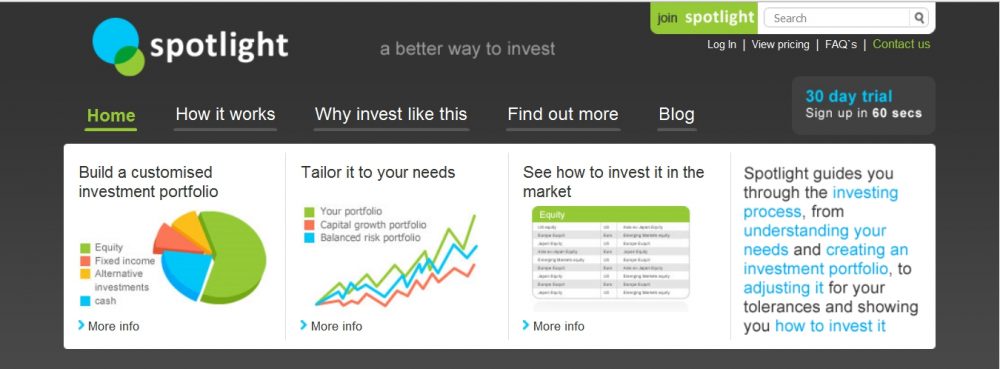
Disclaimer: Spotlight Investing provided trial access to their service only, no monetary compensation was offered for this post.
Lots of people have portfolios they’re comfortable with, that they believe in the strategies, and are sticking with these approaches for the long-term. But many may also have that nagging feeling of, “there could be more” or “there’s a better way to do this”.
As a way of grounding their investments, these people will often look towards technical analysis as a way of complementing their investing styles. On the spectrum, there’s a wide array of techniques: Elliot Wave Theory, Fibonacci Arcs/Fans/Retracements, & Relative Strength Index to name a few. Of course, even the most technical calculations are fallible as we learned with the prediction paradox.