
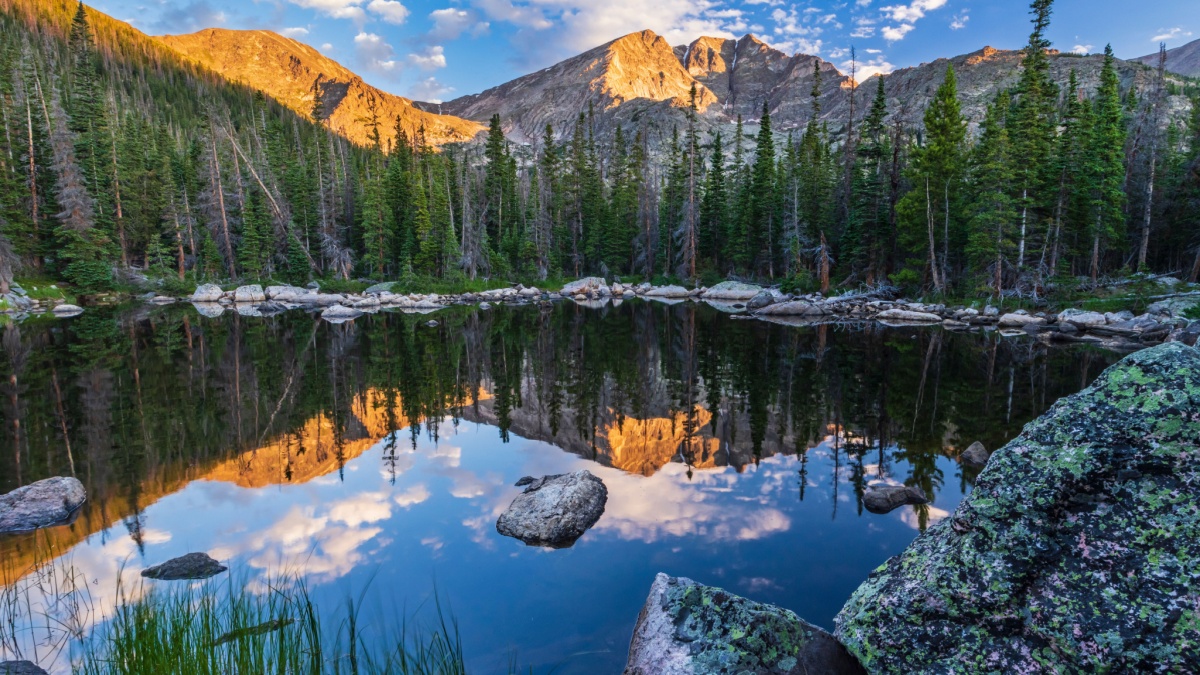

Rocky Mountain National Park in Colorado is the fourth-busiest national park in the country after the Great Smoky Mountains, Yellowstone, and the Grand Canyon. That’s due to a combination of its scenic beauty and being close to a large city (Denver) with a major international airport.
The region is also experiencing rapid population growth as many people relocate to Colorado for the scenery and the lifestyle. When you visit this national park, you have a lot of options for things to do, so here are some ideas to help you plan:
Stop by a Visitor Center
The park has four visitor centers and a discovery center. They’re great places to view films and exhibits about the park’s natural and human history, and they can help you with trip planning.
Drive Trail Ridge Road
Fully open only in the summer, Trail Ridge Road climbs above the timberline and takes you into the realm of alpine tundra. As you might expect, there are spectacular views of the mountains in all directions.
Drive Old Fall River Road
One-way Old Fall River Road is unpaved most of the way, but it’s passable to most cars. Like Trail Ridge Road, it ascends above the timberline into the tundra. Because it joins Trail Ridge Road at the Alpine Visitor Center, you can use the two roads to make a loop tour.
Hike Along the Continental Divide
The Continental Divide separates North America’s Atlantic and Pacific watersheds, and it runs right through the park. Trail Ridge Road crosses it at Milner Pass, and you can get out and wander along the ridges. If you’re up to it, go the full 7 miles to Mount Ida; there are no technical aspects to it.
Tour the Tundra
The tundra world is a fragile and beautiful place, and the Park Service prefers you not to walk on it if possible. At the Rock Cut pullout on Trail Ridge Road, though, you can get on an easy trail that winds through the tundra and some rock outcrops.
Visit the Headwaters of the Colorado
The river that carved out the Grand Canyon and other spectacular features of the Southwest gets its start as a mountain stream high in the Never Summer Mountains. A long trail can help you get to the river’s very beginnings, but if that’s not for you, you can still enjoy seeing the early parts of the river on the park’s west side.
Watch Some Elk
You’re almost guaranteed to see elk on any visit to the park no matter what time of year. They even roam the streets of Estes Park just outside the eastern entrances! Just remember that they are wild animals and that you shouldn’t get too close.
Try Rock Climbing
Rocky Mountain National Park and the surrounding area is a very popular rock-climbing destination. You can sign up with a local guide service to have some fun and learn the basics, and you can even hire a guide to get you up and down one of the mountains safely.
Try Ice Climbing
In the winter, waterfalls freeze over, and it’s time for the ice-climbing season. Again, you can find outfitters that will take care of everything but the climbing itself for you.
Cross a Frozen Lake
Most lakes in the park freeze during the winter months. After checking with park rangers about the ice conditions and getting a green light, you can enjoy the experience of crossing frozen lakes on snowshoes or cross-country skis.
Do the Flattop Mountain Trail
The Flattop Mountain Trail starts at the Bear Lake Trailhead, and it’s about 5 steep miles to this aptly named summit on the Continental Divide. From there, you can cross the wide connecting ridge to ascend Hallett Peak, which is a little higher and doesn’t require any technical skills.
Hike to Dream Lake
The Bear Lake Trailhead also provides easy access to this beautiful subalpine lake that often reflects the surrounding peaks. You can continue to the higher Emerald Lake.
The trail ends there, but it’s possible to continue up the gorge, and if you have crampons and an ice axe (and know how to use them), you can ascend snow slopes to the ridges above, where you can connect with the Flattop Mountain Trail for the return hike.
Hike to Sky Pond
You almost have to see a place with a name like Sky Pond. The trail starts at Glacier Gorge, which is just a little before Bear Lake. Then it climbs nearly 5 miles at a moderately challenging grade, passing two other lakes until it reaches this alpine tarn below the Continental Divide and several spectacular granite spires.
Climb Longs Peak
At 14,259’, Longs Peak is the highest mountain in Rocky Mountain National Park, and it dominates the western skyline from Denver north to Fort Collins. The climb is mostly a hike, but it does have some sections of exposed scrambling.
It’s also a major undertaking: the route up is 8 miles and climbs about 5000’. Most people start several hours before dawn in order to be on the way back down when summer thunderstorms roll in, which can be as early as noon and sometimes earlier.
See Some Waterfalls
There are a lot of waterfalls in the park, and one of the best ways to see some of them is to go to Wild Basin in the southeastern corner of the park. There, an easy trail takes you to 3 waterfalls in under 3 miles.