


Language is ever-evolving. Just ask the makers of the Miriam-Webster dictionary! They need to add and update words every year.
The funny thing is that words change so drastically over time, sometimes even taking on the opposite meaning, that you can read some things from the olden days and think you know what it means when it’s sometimes a completely different meaning.
Here are some examples that surprised me.
Quiz
The word pop quiz might strike fear into the hearts of every school-age student. We’re used to thinking of a quiz (the noun) as a sort of shorter test in school, or possibly the verb, meaning to ask a question. However, a Quiz used to mean an odd person – someone you may snigger about behind your fan. “Did you see her drooping bustle? What a quiz!”
Awful

You and I know that something that is awful is truly terrible! You would never want to hear awful news, and awful food will quickly give you a stomach. But the word awful used to be more closely related to the word awesome, as in, full of awe!
Saying “the birth of my baby was awful” would make your friends today think you were in terrible pain, but would make your friends in the olden days think you were so moved and emotional and grateful at the birth of your baby.
Fizzle
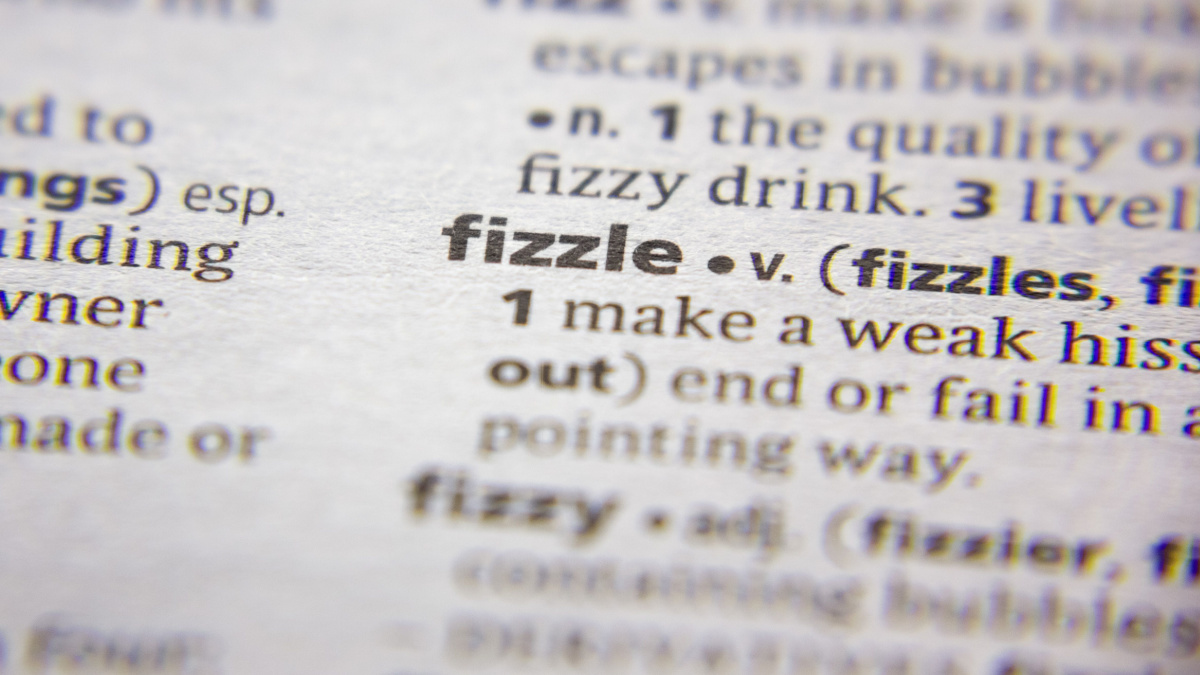
Nowadays, excitement over something might fizzle out. Fizzle means something that was expected to provide a big bang, but instead was slightly deflating. Well, it’s a good thing the original use of this word fizzled out! Fizzle used to refer to someone passing gas quietly. As one might say… silent, but deadly.
Fantastic

When you hear fantastic news, you’ll be filled with elation and excitement! Things that are fantastic are truly great! But fantastic used to mean something much closer to what it actually sounds like – fantasy.
Fantastic meant something that does not seem real, or is a fantasy. So fantastic news would be news that isn’t believable. Unicorns invaded our castle! – now that would be fantastic in both meanings!
Bully

Bullies are truly awful (in the current meaning of the word!) A bully can make your life miserable and leave scars for ages. But I was really surprised when I found out the original meaning of the word. A bully used to mean a woman’s love interest, her one true love.
Somewhere along the way, it started to mean a strong man (I guess all the women’s love interests were very muscular!) and then morphed into a strong but scary man. With a few other stops along the way, it morphed into the definition we know of today. Talk about a 180-degree turn!
Apple
“An apple a day keeps the doctor away!” You and I are thinking of that crispy, crunchy red, green, or yellow fruit that we know and love. However, the word apple was far more ambiguous in the olden days.
If you told someone to eat an apple a day, they wouldn’t know what to eat! An apple used to simply mean a type of fruit – any fruit. You’ll still find the word for apple with that meaning attached to many other words in other languages. So, pineapple simply means a fruit (that looks like) a pine (cone). Makes more sense now, right?
Disappoint

Well, you’d never want to disappoint someone, right? If you’ve disappointed someone, then that means you’ve failed to live up to their expectation of you. Well, the older meaning of the word makes sense but doesn’t mean quite the same thing.
Disappoint used to mean exactly what it sounds like – to dis (or un-) appoint someone from an office. For example, we disappointed the class president, so now we need to vote for a new class president. However, you disappoint someone from the office because they disappoint you, so it kinda makes sense, right?
Secretary

You’re familiar with secretary meaning someone who helps an employer set appointments, take care of records, etc. They may even be sitting at the front desk, greeting customers. However, a secretary used to be someone charged with keeping secrets.
Hmm… I think most secretaries nowadays are also charged with keeping secrets, or at least being discreet! They know that their boss isn’t unavailable to meet you because they are “in and out of meetings all day,” but because they are on the golf course all day.
Nice
Telling your friend that you met a nice boy means something good! You met someone decent and kind. But in the olden days, that would be far from a compliment! Nice used to mean someone simple and not very intelligent.
They could be kind, but if they were nice, that meant their intelligence left something to be desired. Luckily, there are plenty of smart and nice (modern meaning of the word) people nowadays.
Girl
Every little kid knows what a girl is, and can usually differentiate between girls and boys. A girl is simply a young female person, as opposed to a boy, who is a young male person. In the olden days, though, a girl was just a young person, regardless of gender. I guess they were much less binary back then.
Luxury
The word luxury is associated with high-end opulence, with things that we love to have but don’t need. Think marble floors and plush velvet cushions, or smooth, creamy chocolate.
I would definitely want to go on a luxury vacation! But in the olden days, luxury wasn’t a good thing. It was more closely related to the word lecherous and meant lustful in a bad way. The word has changed quite a bit!
Meat
We refer to meat as the flesh of any animal (usually that we eat). So you might say, “I’m staying off of meat for the next month,” and that means no steak for you. Your friends would congratulate you on your self-control.
But if your friends heard you say that a long time ago, they’d be rightly concerned for your health! They’d think you would be starving yourself for a whole month because meat used to mean any solid food at all. You’d get pretty hungry pretty quickly!
15 Things Dad Taught Us That We Still Use Today

Our dads have a unique way of imparting wisdom that sticks with us throughout our lives. From life lessons to practical advice, here are 15 things Dad taught us that we still use today.
15 Things Dad Taught Us That We Still Use Today
15 Modern-Day Cults That Are Hidden in Plain Sight

Think cults are a thing of the past? Think again. Let’s explore 15 modern-day cults that are hidden in plain sight. From religious extremist groups to exploitative business schemes, these organizations are flying under the radar.
15 Modern-Day Cults That Are Hidden in Plain Sight
19 Cultural and Behavioral Differences Between Gen Z and Millennials

Each generation brings its unique set of cultural and behavioral differences. Gen Z and millennials, two distinct generations, have grown up in contrasting times, shaping their values, preferences, and attitudes.
Here are 19 key differences between Gen Z and millennials:
19 Cultural and Behavioral Differences Between Gen Z and Millennials
15 Common Boomer Opinions Non-Boomers Actually Agree With

Boomers often get a rap for being old cranks with outdated views and opinions. That doesn’t mean all their opinions are wrong or behind the times, though. Sometimes, they’re spot on, and plenty of younger people see eye-to-eye with them.
Following are some notable examples.
15 Common Boomer Opinions Non-Boomers Actually Agree With
15 Surprising Things Millennials and Boomers Actually Agree On

Boomers get stereotyped for complaining about how bad everything is, but sometimes they have a point. What things are you “I’m with the Boomers” on? Internet users shared their thoughts.
15 Surprising Things Millennials and Boomers Actually Agree On